Sea Week at Whatamango Bay – QCC Rangatahi in Action
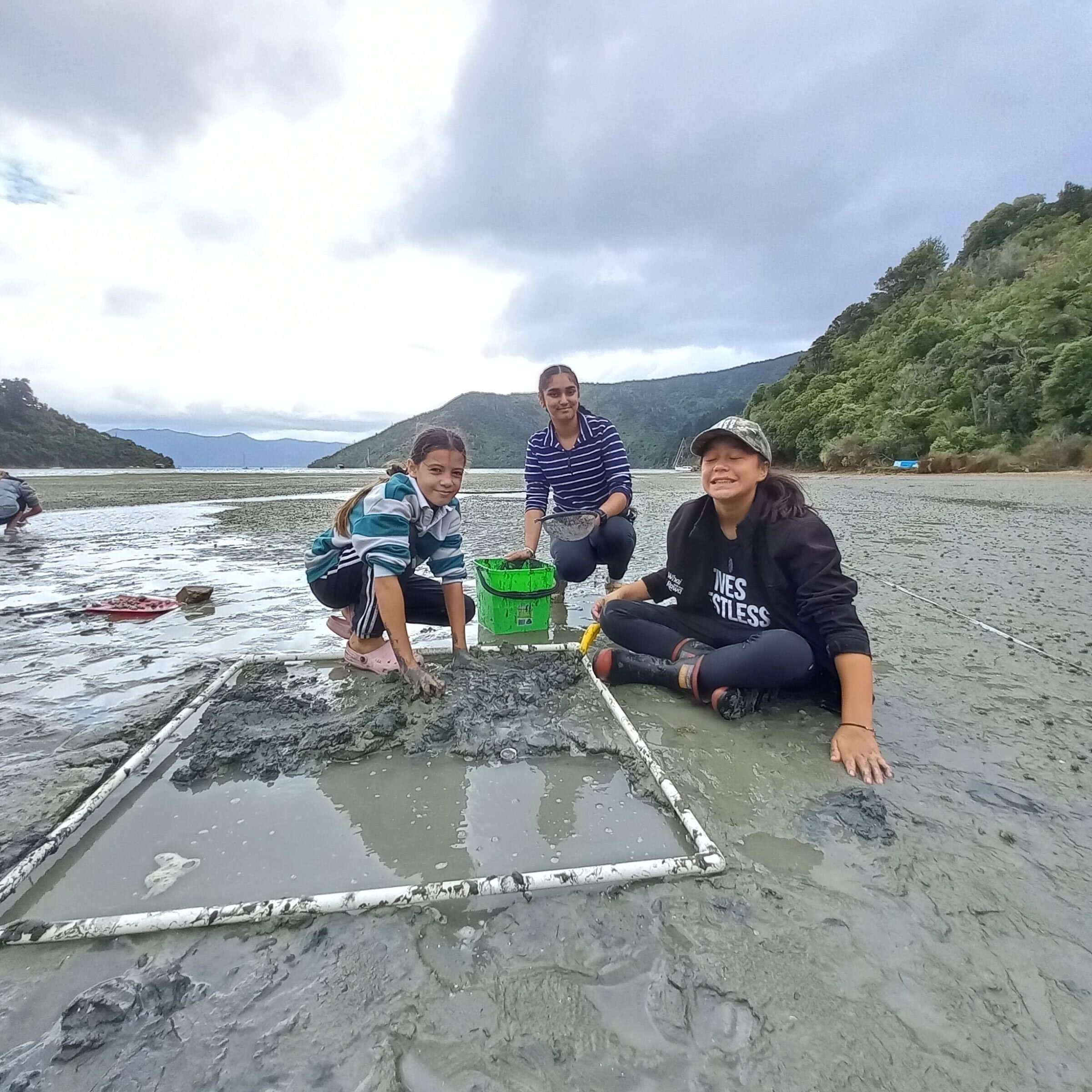
A group of 20 Year 7 and 8 rangatahi led by Di Huntly from Queen Charlotte College celebrated Sea Week the best way possible by getting wet, muddy, and hands-on with tuangi/cockle monitoring at Whatamango Bay.
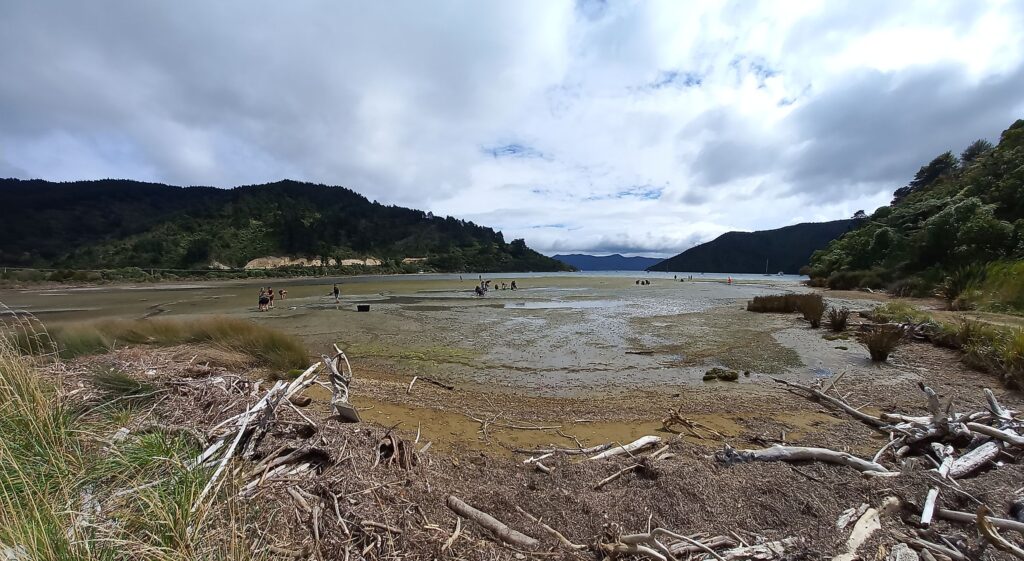
The beautiful rimurimu meadow of Whatamango Bay
The day was a special collaboration with Glenis Paul from the NZ Marine Studies Centre, Kiara Duke-Love from Te Ātiawa, and the college, bringing together science, mātauranga Māori, and local knowledge in one learning experience.
The morning began with Matua Neville Tahuaroa-Watson, who opened the day with a karakia and the laying of a treasured pou. This set the intentions for the mahi ahead and asked for the protection and guidance of Tangaroa.
Matua then shared stories of how mana whenua traditionally harvested kai moana from the bay. He explained why Whatamango is known for its plentiful and thriving tuangi beds. His kōrero grounded the day in history and whakapapa, reminding students that monitoring today connects to generations of kaitiakitanga before them.
From there, it was down onto the sandy beach and it definitely wasn’t a day for relaxing! The mahi required teamwork, focus, and a fair bit of muscle.
Tuangi monitoring
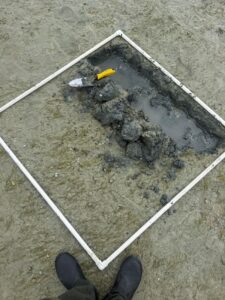
Just getting started digging down to 15 cm
Working in groups of four, rangatahi carefully laid down 1m² quadrats and dug each square to a depth of 15cm. Every scoop of sand had to be sieved through water to make sure no tuangi were missed. Each tuangi found was gently set aside to photograph. Once photographed, the cockles were carefully returned to the exact sandy home they had come from.
Kiara later uploaded the photos to an app that automatically measured and recorded the size of each cockle.
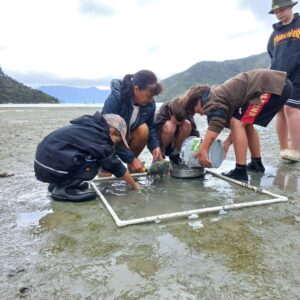
Another bucket of sand goes into the sieve
Tuangi monitoring is about much more than counting shellfish. By measuring size, numbers, and distribution over time, rangatahi are helping build a picture of the health of this significant mahinga kai (harvesting area) for Te Ātiawa. It deepens their understanding of the biodiversity within the rimurēhia/seagrass meadow where the tuangi are found. If fewer tuangi are found, or if most are too small to harvest, it signals that the ecosystem may need time to recover. Gathering consistent data year after year helps to make informed decisions about sustainable harvesting. To ensure there will be enough mature tuangi for future generations and guide how we care for te moana.
The data the rangitahi collected will also feed into two monitoring kaupapa with Cawthron; the Changing Microalgal Communities programme and Restore the Meadows. A short report created for Restore the Meadows will be co-authored by the QCC tamariki.
-
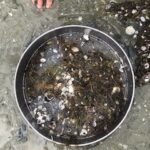
- Rimurimu and tuangi in the sieve
-
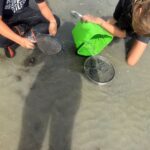
- Sieving sand to find tuangi
-
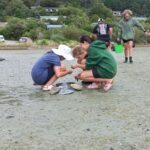
- Looking for tuangi after sieving sand
Marine Metre Squared Programme
After the monitoring work, students had a taste of the Marine Metre Squared (MM2) programme. This involved counting shells and crab holes within smaller 10cm² quadrats placed along the low, mid, and high tide marks. It was a great way to see how life shifts across the shoreline.
Tired, sandy, and definitely hungry, the group headed back to college for a well-earned lunch break before uploading and recording their data on the MM2 website. Their findings now provide a baseline measurement, something they can return to and compare in years to come.
It was a day of real-world science in action. Muddy hands collecting meaningful data, and rangatahi contributing to the ongoing care of Whatamango Bay.
Ka mau te wehi, QCC!