Picton School – Growing a Food Forest From the Ground Up
A small group of Picton School tamariki taking part in the Science Alive programme spent Terms 2 and 3 diving deep into food forests and composting. What they achieved was incredible!
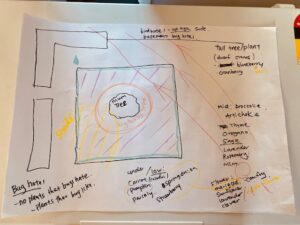
The food forest plan
Their goal was to set up a hot composting system in their Kids Edible Gardens and transform the ornamental garden near their lunch area into a thriving, productive space full of vegetables and herbs.
They began by exploring how food systems work, then headed out to Esson’s Valley to see decomposition happening naturally. In the ngahere they noticed something important, the forest has a structure. Tall trees form the canopy, smaller plants create the understory, and ground covers thrive below. Everything grows together in a way that supports the whole system.
Back at school, they experimented with Bokashi, a Japanese composting method that ferments all kinds of food scraps, even meat and cheese. This became the starter for their hot compost.
As they gathered materials, the group kept thinking about the structure of the ngahere they’d visited. Could they recreate it at school? They researched what plants could form their canopy, understorey and forest floor, and drew up a plan to present to the school.
It wasn’t hard to collect green materials for their Bokashi buckets. What they needed was brown carbon material, so they reached out to the community. Soon cardboard, paper bags, wood shavings, egg cartons and bags of autumn leaves were being dropped off.
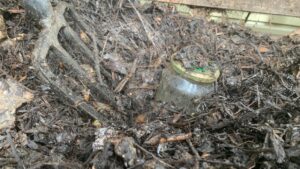
The jar of water in the compost heap got warmer as the temperature of the heap rose.
Hot composting
Once their drop-off point was overflowing, it was time to build the heap – layering green and brown materials like a lasagne. Every few days the tamariki checked the heap’s temperature, tracking the rise as it heated up. They even buried a jar of water inside to measure the change. There was no doubt it was working steam could be seen rising out of the heap as it climbed to a sizzling 70°C!
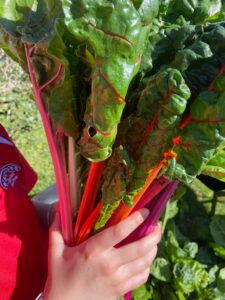
Rainbow silver beet harvested from Kids Edible Gardens.
The result?
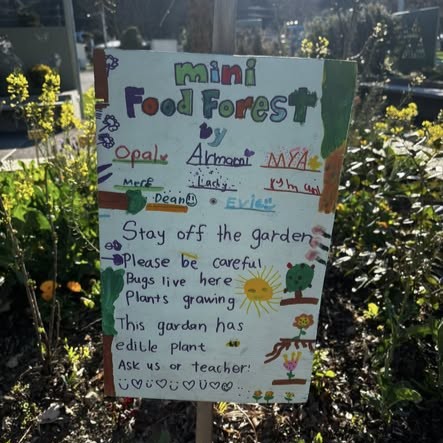
A rich, beautiful soil perfect for feeding their new food forest and improving their Kids Edible Gardens. Their food forest is now well established, and the group can’t wait to harvest their first produce this term — some of which will be shared in the school’s pātaka kai and with their lunch providers.
And an unexpected bonus? By collecting food scraps for Bokashi, the school’s food waste dropped from 100–200 kg a term to zero. A huge achievement and an amazing example of tamariki-led action making real change. You can be sure they will continue with hot composting.
High five to the Science Alive group. Maybe you could teach us how it’s done next year.
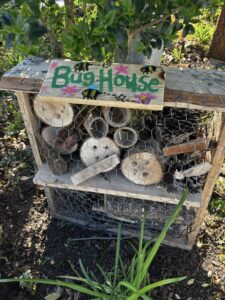
The food forest even has a bug house.