
Kūmara – Kai from the Atua Rongomātāne
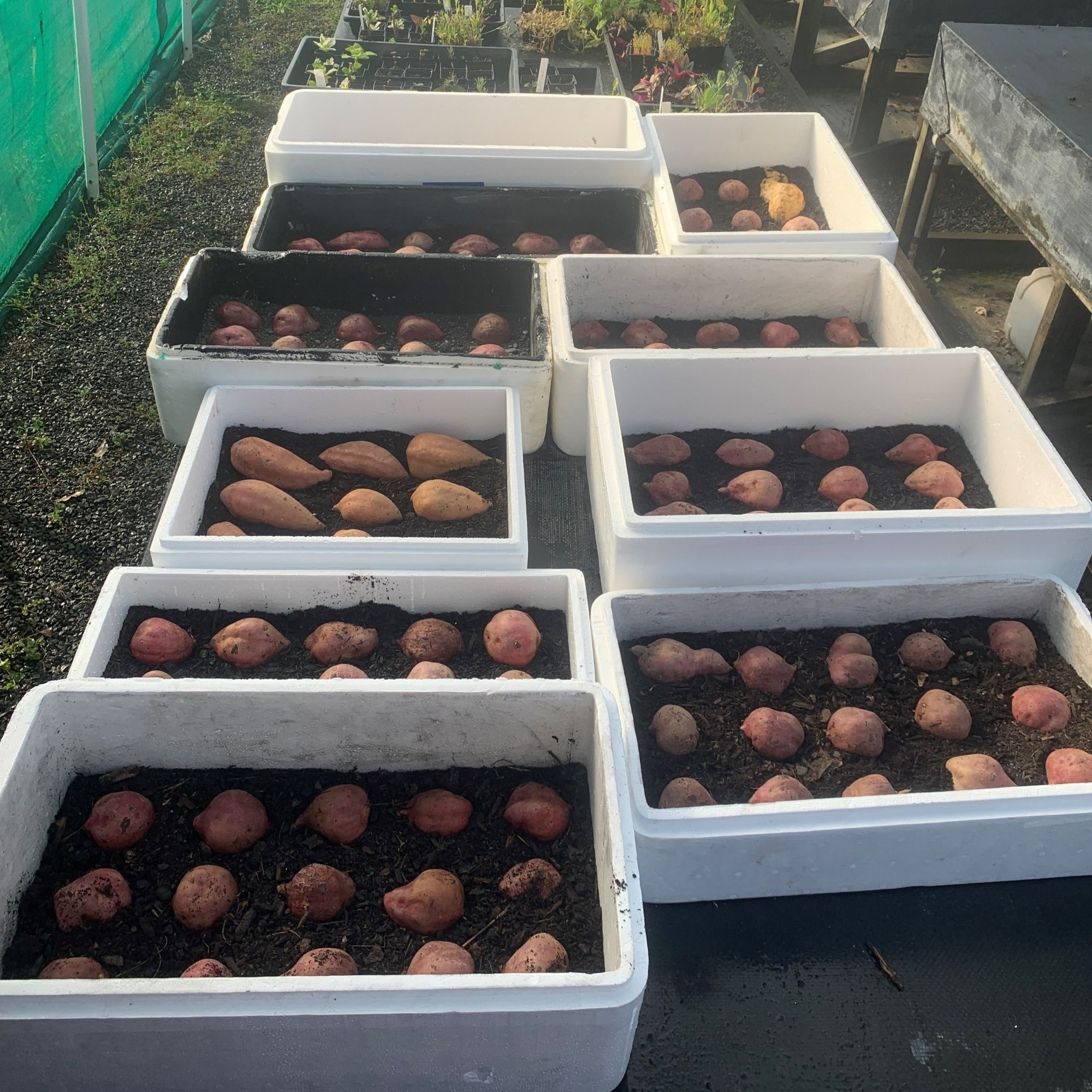
Kūmara is a treasure gifted to us by Rongomātene, atua of cultivated crops as well as peace and manaakitanga. It sustained the first Polynesian explorers when they arrived in Aotearoa. They adapted their growing methods to a cooler climate, carefully storing kūmara through winter and planting again in spring.
This season, rangitahi from Redwoodtown and Rapaura Schools were given the opportunity to make tepapa kūmara (seed beds). They’ve joined a growing group of rangatahi who are connecting to the whenua raising kūmara tipu and growing kai.
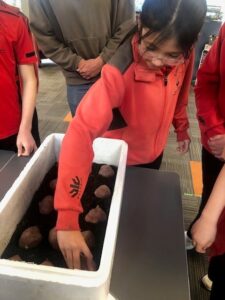
Making sure the kūmara are planted the right way at Redwoodtown School.
The idea came from Reuben Molnar, who visited as part of the Climate Change Learning Programme. He shared his knowledge of using Mātauranga Māori and the Maramataka to grow kūmara in ways that help reduce the impacts of climate change.
But how does growing kūmara actually help?
Knowing how to grow our own kai and eating locally grown food reduces packaging, transport, and the carbon emissions that come with them. It also makes us a stronger community – if a weather event impacts kūmara production in Northland (where most kūmara is grown), having our own backyard or local supply means we’re less affected.
Reuben and rangatahi are already leading the way. They raised over 3,000 tipu at NMIT for this year’s April harvest of nearly 200 kilograms of kūmara from the Community Gardens – sharing the tipu and harvest with whānau, schools, and community groups.
Reuben explained that because kūmara originates from warmer Polynesian regions, it needs to be “woken up” in our cooler climate. Learning that the kūmara need to be laid on their sides all facing the same way, the rangatahi at Redwoodtown and Rapaura Schools gently nestled the kūmara into soil in insulated boxes. Reuben then took them to NMIT’s tunnel house where they will have bottom heat and regular misting to continue their growing journey.
Where to from here
Looking ahead, the plan is to again share tipu with the community and align the planting of tipu with the maramataka in November. Then care for them over summer, and then harvest again in April – guided once more by the maramataka to find the right time.
We’ll be keeping an eye on their journey – ka pai! What a great way to bring mātauranga, local kai growing, and climate action together.”