
Aquanauts – Exploring Beneath the Surface
Twenty tamariki from four schools became Aquanauts for the day, joining Glenis Paul from the NZ Marine Studies Centre for an amazing day of hands-on science, problem-solving and underwater exploration.
The morning began by exploring the nature of science – observing, measuring, identifying, questioning and using evidence to find answers. Tamariki rotated through a range of activities, measuring the salinity and temperature of water from rivers, estuaries and the moana. Then estimating the age of tuangi by counting the ribs on their shells. Followed by identifying different shells and becoming mudflat detectives by matching signs of life with the creatures that made them.
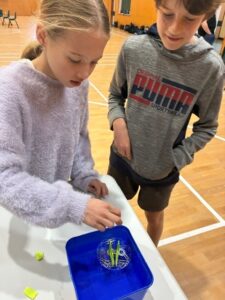
Finding neutral bouyancy is not as easy as it sounds
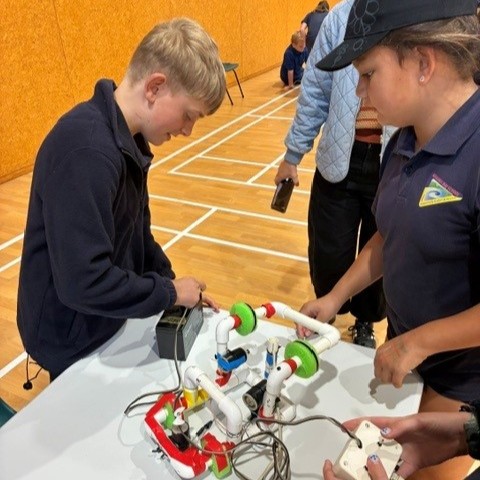
Next came some very cool technology! Glenis introduced us to ROVs (remotely operated vehicles), or underwater Bots. Scientists use ROVs to explore and monitor places that can be difficult or potentially unsafe for people to reach. Think deep water and places where you might encounter sharks or crocodiles!
But why would something designed to work underwater need flotation? To find out, tamariki were set a challenge: achieve neutral buoyancy.
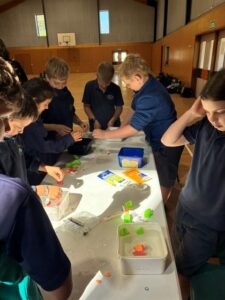
Floating, sinking, neutral bouyancy
Neutral buoyancy occurs when an object in the water is able to sit perfectly in the middle of the water without sinking to the bottom or bobbing back to the surface. It sounds simple, but proved very tricky! Before long, everyone, including the parents helping for the day, were completely absorbed in the challenge. There was lots of trial and error, moving weights, changing flotation, testing, adjusting and trying again. It was a great example of science in action and showed that sometimes getting it wrong is an important part of working out how to get it right.
The challenge also helped tamariki understand how many bony fish are able to control their buoyancy using a swim bladder, a stretchy, balloon-like sac inside their body. By changing the amount of gas in the swim bladder, a fish can adjust its buoyancy, helping it move up or down and maintain its position in the water.
Aquabots
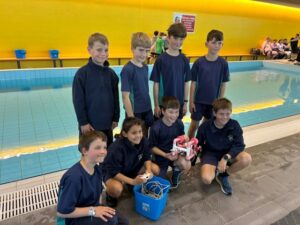
After lunch, it was off to Stadium 2000 and finally time to get the Aquabots into the pool. Working in teams, tamariki took turns driving and manoeuvring the Bots underwater, navigating them through hoops and picking up objects.
It was another great exercise in teamwork and perseverance. Driving an underwater Bot was not as easy as it looked. Success often meant communicating with teammates, adjusting the approach and having another go.
-
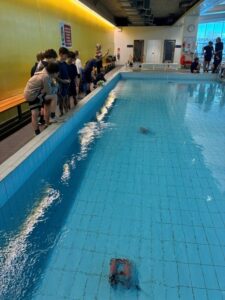
- Bots in the water
-
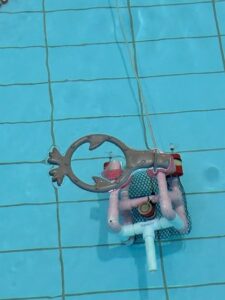
- Using the bot to pick up the swim ring
From solving mudflat mysteries and investigating tuangi to experimenting with buoyancy and driving underwater robots, it was an amazing day packed with learning and new experiences. One we think our Aquanauts will remember for quite some time.
-
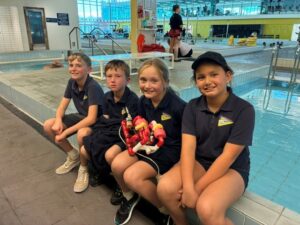
- Waikawa Bay School
-
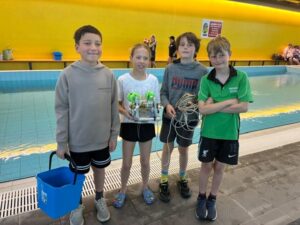
- Renwick School
-
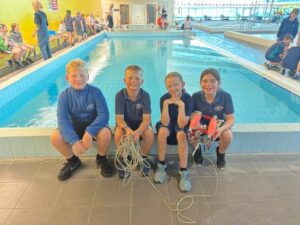
- Riverlands School
-
- Springlands School