
Looking at the Awa Through a Different Lens
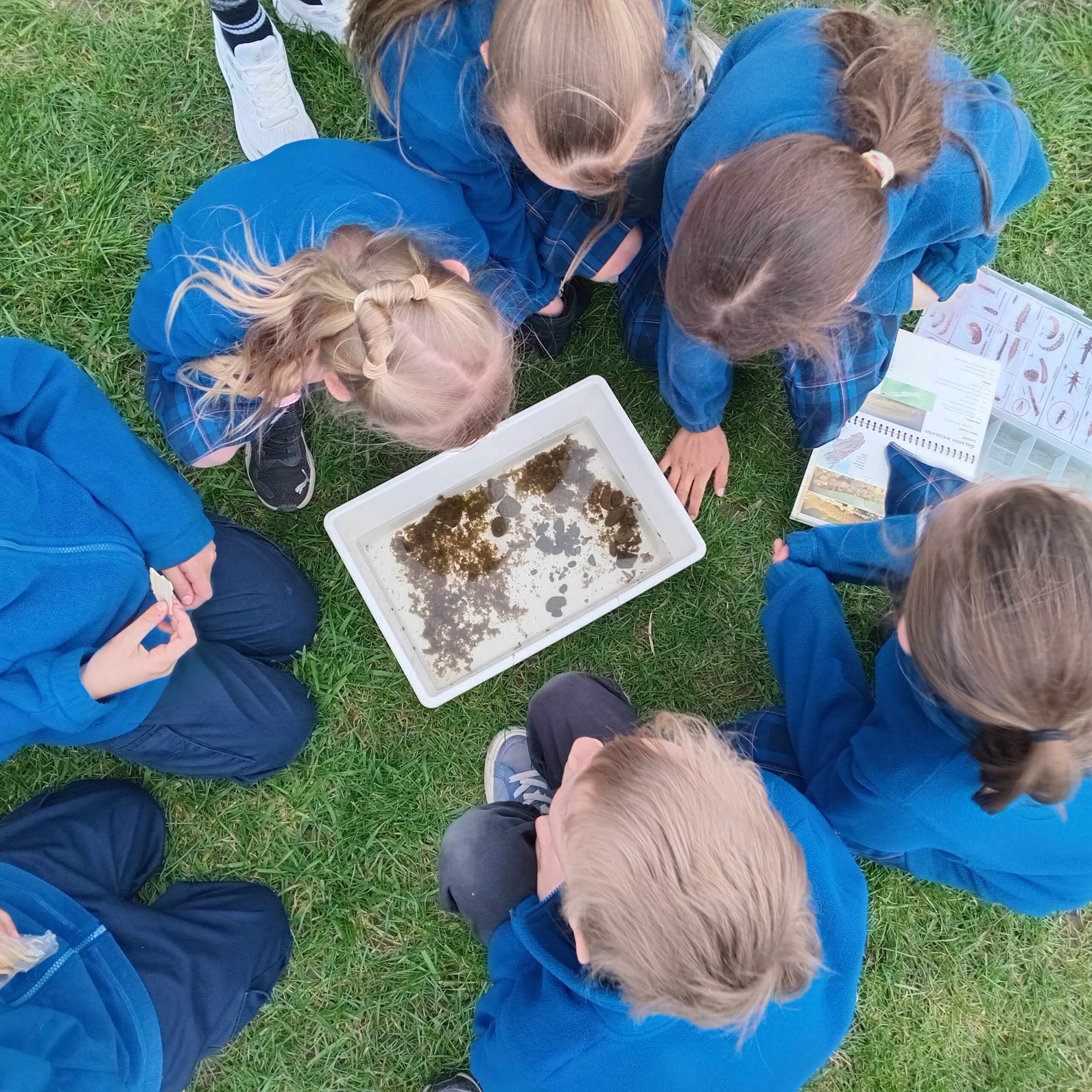
Five classes from Riverlands School headed to the Taylor River this term for a stream study to support their classroom inquiry learning. With the water still far too chilly for tamariki to get in, it was the perfect opportunity to discover that there are other ways we can assess the health of an awa.
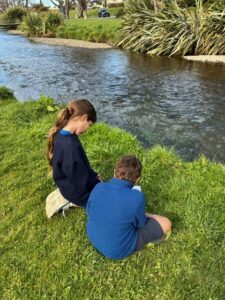
Riffles are shallow fast flowing areas where water bubbles over rocks adding oxygen to the awa.
Tamariki put their observation skills to the test, taking a close look at what was happening in and around the river. They investigated the material covering the stream bed, the amount of algae present, pools, riffles and runs, plants providing shade and the stability of the riverbanks.
Each of these features can tell us about the health of an awa. Clean gravel and rocks provide important homes for freshwater invertebrates and allow oxygen to flow through the stream bed. Pools, riffles and runs create different water flows and a variety of habitats, while plants along the banks provide shade that helps keep the water cool for the many freshwater species that depend on it.
Of course, no stream study would be complete without meeting some of the invertebrates living beneath the surface! Before the classes arrived, Angela, Sarah and Ramona braved the cold water to collect a selection of freshwater invertebrates for tamariki to discover and identify. Finding a good variety of invertebrates and fish can provide another important clue about the health of an awa.
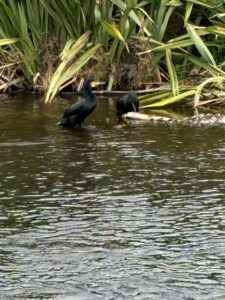
A tasty trout for two shags on the side of the awa.
There was also plenty of excitement when they shared a video captured that morning of two shags wrestling with a large trout they had caught in the river. As you can imagine, everyone was amazed!
Finally, tamariki regrouped to look at the awa through a te ao Māori lens, exploring the life force or mauri of the awa. They considered the life the river supports, the connections between its different parts and how well the whole system works together. This gave them another way to think about what it really means for an awa to be healthy.
The learning didn’t stop when we packed up. Tamariki headed back to school with a challenge for their walk: Is every part of the awa in the same condition? What changes can you notice as you pass through different sections of the river?
A great reminder that sometimes the best scientific tool we have is simply to slow down, look closely and notice what is happening around us.
-
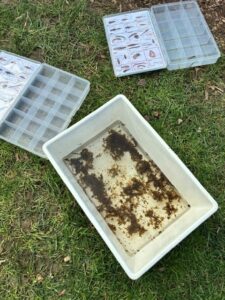
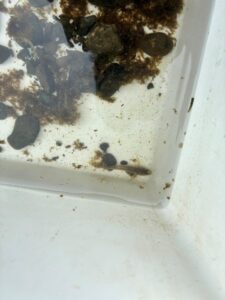
- Containers of invertebrates and bug boxes out for tamariki to identify what is living in the awa.
-
- One of the small fish found in the awa.