Fairhall School – Waste Wise & Creative Solutions
Fairhall School’s Envirogroup has been diving deep into the kaupapa of Zero Waste. They have been exploring how they can reduce rubbish and rethink materials within their school community. Ramona and Sarah visited with the new Waste Wise programme that can be leant out to schools. It is full of activities and learning topics, and can be used for the group’s fortnightly hui, sparking lively discussion and discovery.
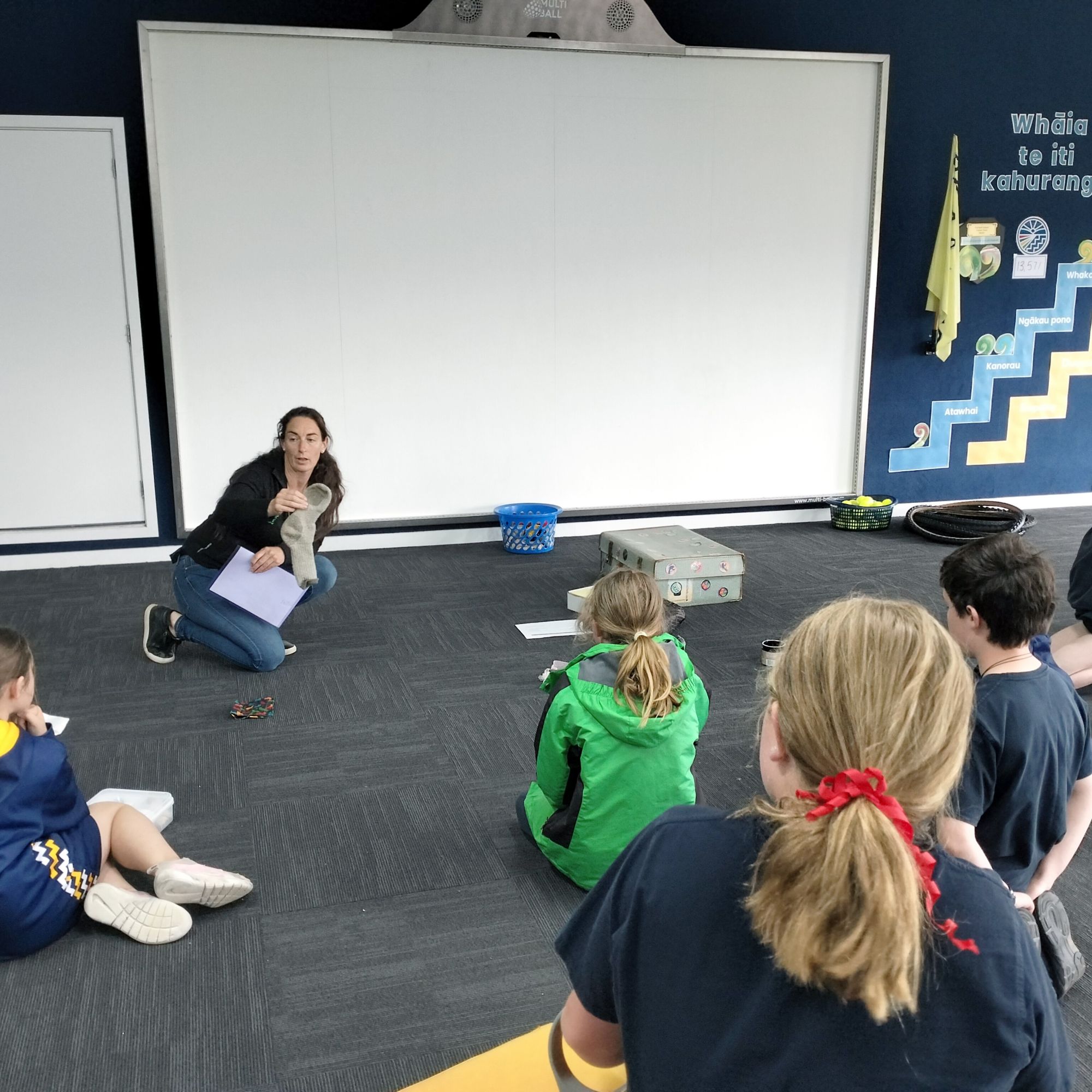
The session began with the Waste Timeline activity, where everyone was astonished to learn that glass can take up to a million years to break down. The tauira already knew that plastic never truly decomposes — instead turning into microplastics that remain on Papatūānuku forever — but this new knowledge added urgency to their learning.
-
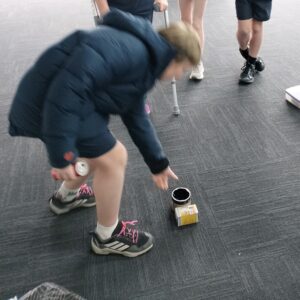
- Where do different types of metal sit on the waste timeline
-
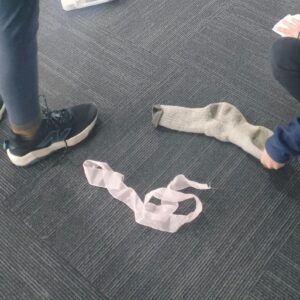
- The tamariki wondered where a woolen sock goes on the waste timeline
Their curiosity led to a flood of thoughtful questions:
- “Aren’t there microorganisms that can eat plastic?”
- “Would a metal spoon break down faster in a field or by the ocean?”
- “What can people do to make plastic decompose at all?”
- “What happens when we run out of room to bury rubbish?”
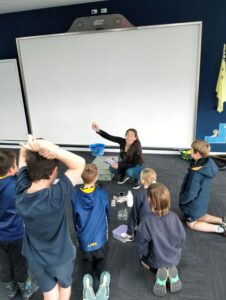
Ramona teaching the akonga about how long it takes for different types of waste to break down
The discussion quickly turned solution‑focused. Some students had heard of Future Post, which turns soft plastics into fence posts. While others suggested compressing plastic into bricks for building. The group’s creativity and critical thinking shone through.
Fairhall’s Envirogroup has already begun taking action — washing their plastic sushi packets after the school‑wide sushi day so they can be properly recycled. They’re also planning a roster system where each class takes responsibility for keeping a part of the school litter‑free. Other possible next steps on the horizon include designing educational posters. Or hosting a community session to share the Zero Waste kaupapa more widely.
This inspiring group of tauira is showing how curiosity, teamwork, and innovation can lead to real environmental change — one idea at a time.