
Wildflower Seed Bombs for Bee Aware Month
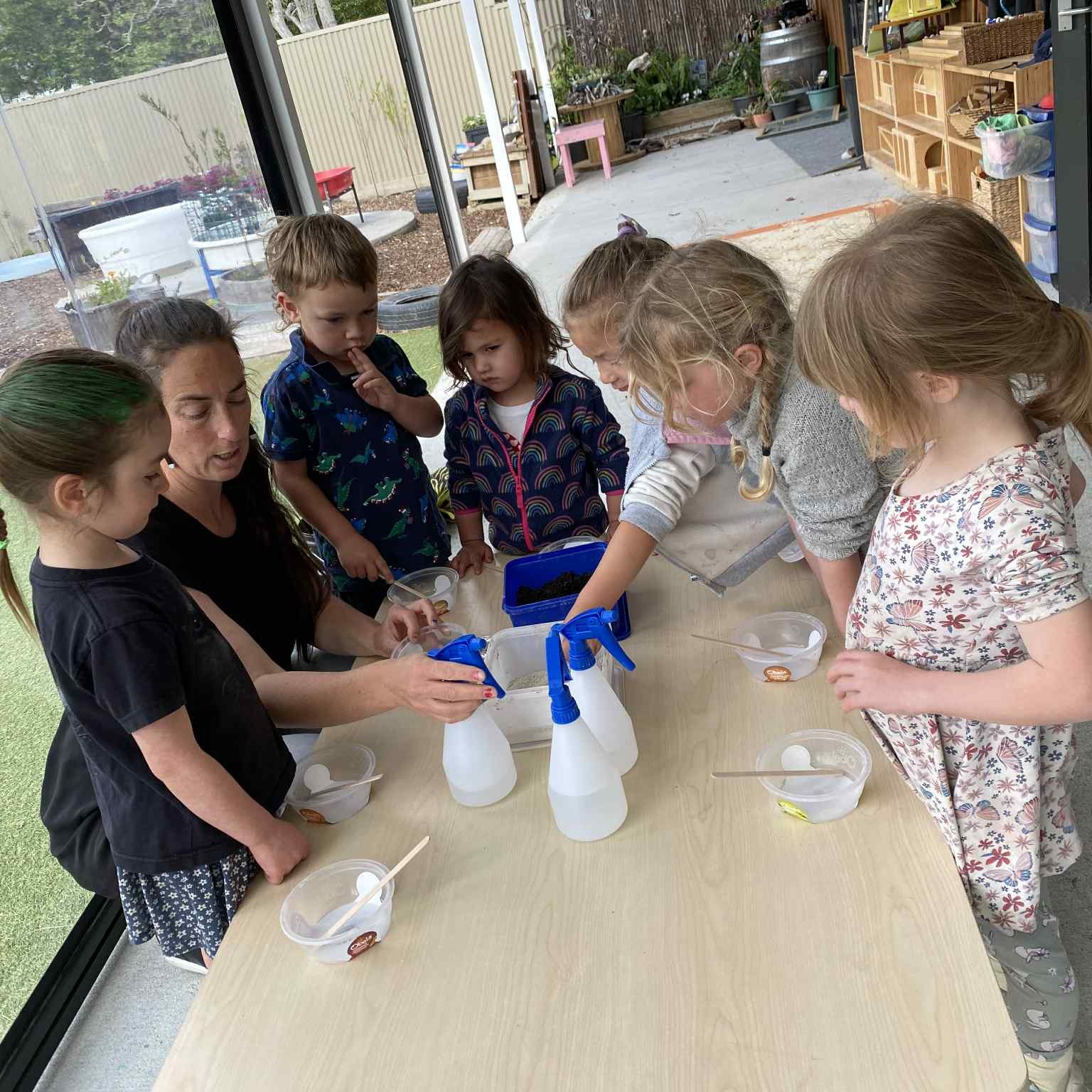
Young tamariki across Marlborough were buzzing as they learnt all about bees and pollination. For the month of September, Ramona visited ECE services to celebrate Bee Aware Month. She took with her a kit of resources that included a bee pollination activity and equipment to make wildflower seed bombs.
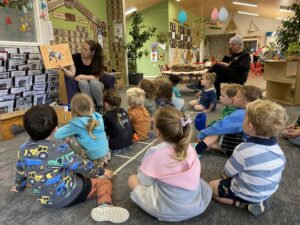
Ramona talking with the tamariki at Awatere Early Learning Centre
Each session started with a quick discussion about pollen and nectar and some interesting facts;
- Bees use their antennae to smell. They can detect nectar 2 km away.
- Worker bees produce about 1/12th of a teaspoon of honey in their lifetime.
- On one flight from the hive to collect honey, a honey bee will visit between 50 and 100 flowers.

Wren dressed as a honey bee ready to pollinate the flowers
Following that, one lucky student got to be a honey bee and visit some flowers. Wearing a headband with antennas and some wooly socks, they buzzed from flower to flower exchanging pollen (gold and white pompoms) from each flower and their socks. Once the flower had been “pollinated” it was turned over to reveal the kai that had grown – demonstrating the process of pollination.
There was a consensus across each group that honey was pretty tasty. As were strawberries so the idea of planting more flowers for bees was a priority.
Wildflower Seed Bombs
Small groups of tamariki were invited to then make the wildflower seed bombs. Each student was given their own container and after listening carefully to the instructions they begun the process of construction. First scooping in the ingredients of compost and powered clay and a small sprinkle of seeds. They then gave it a few squirts of water before mixing it all together. Using their hands they rolled the ingredients into balls to form the “bomb”.
-
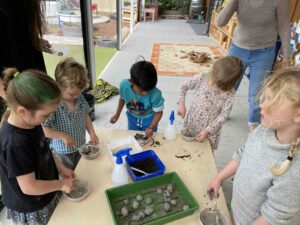
- Tamariki making the seed bombs
-
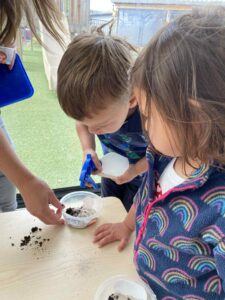
- Adding the water
-
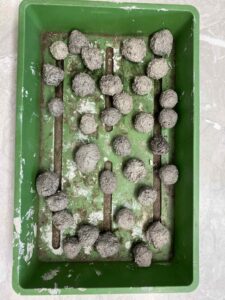
- Wildflower seed bombs
A messy but fun experience. But we hope they will create an explosion of colourful flowers to help the bees, by providing them with more flowers!
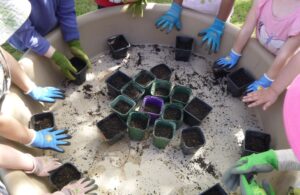
Tamariki at Seymour Kindergarten have trialed planting some of their seed bombs in pots to be like “live herbs”.