Sea Week at Waikawa Bay – Nature of Science in Action
For tamariki at Waikawa Bay School, the moana isn’t something far away; they can see it from their school grounds. It’s part of their everyday landscape, featuring in their murals, artwork, and local stories. So when Glenis Paul from the NZ Marine Studies Centre (Whakatū/Nelson) found time in her busy schedule to support learning during Sea Week, the school jumped at the opportunity.
I was also keen to learn a thing or two and joined in for the morning!
The focus was the Nature of Science, with students rotating through ten hands-on marine activities, each one deepening their understanding of the sandy bay close by.
-
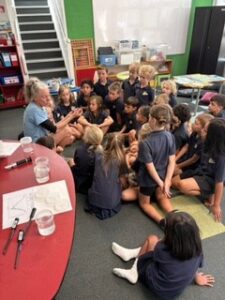
- Glenis talking all things marine with tamariki
-

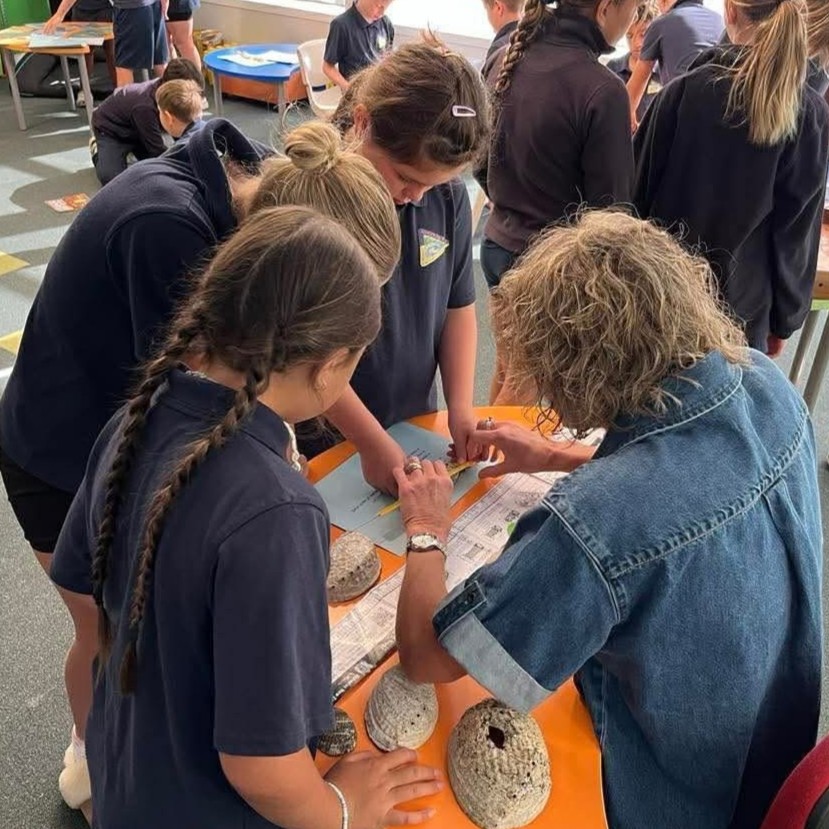
- Finding the most accurate way to measure the length paua shells
-
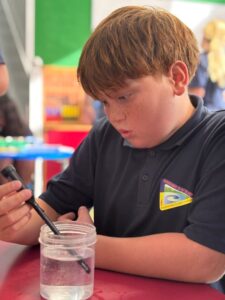
- Checking the temperature of several water samples
They explored the life cycle of crabs, learning how to tell the difference between male and female crabs. FYI – the abdominal flap on the underside of a male mud crab is long and narrow, often shaped like a thin triangle whereas a female mud crab has a wide and rounded flap to carry eggs underneath their body. They measured salinity using refractometers, discovering how much salt was in the water and what that means for marine life.
Clam shells were carefully examined to estimate their age by counting the ridges on their shells. Then tamariki were encouraged to think about why some ridges were closer together than others.
They practised using an identification key to name different shells and were surprised to learn that a chiton shell isn’t one shell at all, but made up of eight separate plates!
A game of “Guess Who?” had students matching signs of life in the sand with the creatures that made them including the mud snail, which leaves a distinctive circle of sand as it lays its eggs in layers beneath the surface.
They even learned how to use calipers to accurately measure the length of pāua building practical scientific skills alongside their curiosity.
-

- Using an identification key to sort and name shells
-

- Measuring the length of paua shells with calipers
-

- Counting growth ridges on clam shells
As you can imagine, the tamariki loved the hands-on investigations and discovering more about the creatures that call their sandy bay home. It was an amazing way of connecting place, science, and wonder.
We are hoping to have Glenis back in Term 2 so that more children have the opportunity to learn about the marine environment.